
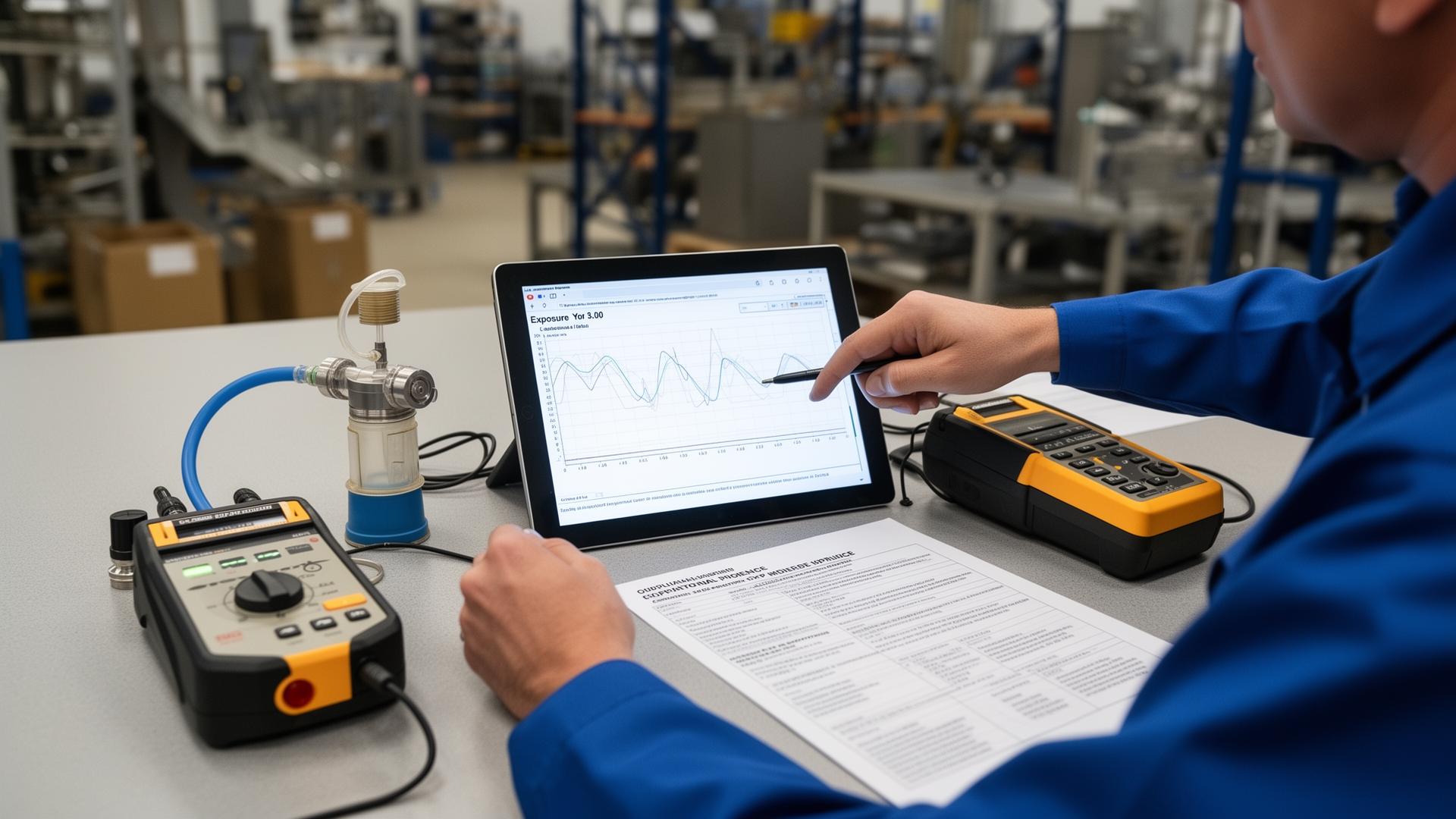
Airborne contaminants monitoring in an industrial workplace

Occupational hygiene

Workplace Contaminant Monitoring

Workplace contaminant monitoring quantifies airborne contaminant exposure across your operations and verifies that ventilation and controls are keeping levels within safe limits.

Method

MDHS / BS EN 689

Sampling

Personal & static

WEL (EH40)

ALARP / COSHH

Turnaround

5–10 working days

01

What is workplace contaminant monitoring?

Airborne contaminants monitoring measures the airborne concentration of dusts, fumes, vapours and gases contaminating the working environment that workers may breathe in during normal operations. It quantifies real personal exposure so employers can judge whether existing controls are adequate.

IndustrialAirMonitoring.uk provides independent workplace contaminant monitoring across manufacturing, warehousing, process industries, engineering sites throughout the UK. Our occupational hygienists deliver defensible exposure data that demonstrates compliance with the Control of Substances Hazardous to Health Regulations 2002 (COSHH) and the workplace exposure limits set out in HSE guidance note EH40.

02

Why workplace contaminant monitoring matters

Under COSHH Regulation 10, employers must monitor exposure to hazardous substances where it is needed to protect health, where a workplace exposure limit could be exceeded, or where control measures need to be verified. Airborne contaminants monitoring provides the objective evidence that satisfies this duty.

Uncontrolled exposure to airborne contaminants is linked to respiratory and systemic occupational disease. Beyond the legal duty, robust monitoring protects your workforce, reduces the risk of enforcement action and civil claims, and gives insurers and clients confidence that exposure is being actively managed.

03

How we carry out workplace contaminant monitoring

We measure exposure using personal and area sampling matched to each contaminant of concern, following the recognised MDHS / BS EN 689 methodology. Personal samplers are worn in the breathing zone for a representative full shift to derive an 8-hour time-weighted average, while static (background) samples help map contaminant sources across the workplace.

Samples are analysed by an accredited laboratory and the results compared with the relevant occupational exposure limit. Where short-term peaks are a concern we add 15-minute short-term exposure limit (STEL) sampling, so both the chronic and acute risk picture is captured.

04

Standards, limits and reporting

Airborne contaminants is controlled to as low as is reasonably practicable, with sampling benchmarked against published occupational and in-house standards. We assess compliance using the BS EN 689 statistical decision framework, which accounts for exposure variability rather than relying on a single result.

Your report sets out the measured concentrations, the compliance position, the adequacy of existing controls such as local exhaust ventilation, and a recommended re-monitoring interval. It is written to be understood by managers and to satisfy HSE inspectors, auditors and insurers.

05

Our workplace contaminant monitoring process

Our workplace contaminant monitoring programmes follow a structured, four-stage workflow so the results stand up to scrutiny. Request monitoring or book a site assessment to begin.

  1. 1Scoping & site survey. We review your processes, COSHH assessments and previous workplace contaminant monitoring data, then plan a representative sampling strategy using BS EN 689 similar exposure groups.
  2. 2On-site sampling. Qualified occupational hygienists carry out calibrated breathing-zone and static measurements across a representative shift, with full chain-of-custody documentation.
  3. 3Accredited analysis. Samples are analysed using the relevant MDHS / ISO laboratory method and the results are compared against the applicable workplace exposure limit.
  4. 4Reporting & recommendations. You receive a clear exposure report with compliance status, control recommendations and a re-monitoring interval — defensible evidence for HSE, insurers and auditors.
06

Frequently asked questions

What contaminants can you monitor?

Airborne dusts, fumes, solvent vapours, acid mists and toxic or flammable gases — the method is selected per contaminant.

How do you verify controls?

By comparing exposures with and around controls, and by pairing monitoring with LEV testing where extraction is the main control.

How are results reported?

As a clear exposure report with compliance status, control adequacy and recommended re-monitoring intervals.

Next step

Need workplace contaminant monitoring for your site?

Request monitoring